WhatsApp / Wechat / Mobile : +86 13164016717


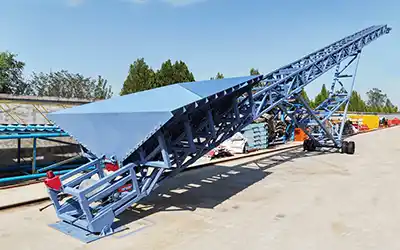
For a long time, the mine conveying field has formed a traditional model dominated by "fixed routes + heavy transportation", but its shortcomings in complex scenarios have become increasingly prominent. Fixed belt conveyors, as the mainstream equipment, can realize continuous conveying with large inclination angles and curves, but their infrastructure costs are high, and once the route is formed, it cannot be adjusted. Facing the dynamic migration of mine working faces (advancing hundreds of meters annually), they often face the embarrassment of "disconnection between the conveying terminal and the working face" after 3-5 years of operation. Dump trucks, as a flexible supplement, are limited by fuel consumption (over 50 liters per 100 kilometers), maintenance costs (over 100,000 yuan per vehicle per year), and terrain adaptability (unable to pass when the slope exceeds 15 degrees). Even in rainy and muddy sections, there is an inefficient situation where "transporting 1 ton of material requires 2 liters of fuel".
More critically, traditional equipment is difficult to meet the special needs of mines: when belt conveyors handle sticky and wet materials, the belt adhesion rate can reach more than 15%, resulting in a 30% reduction in conveying efficiency; during truck transportation, the material spillage rate exceeds 5%, which not only causes resource waste but also leads to road dust (PM2.5 concentration can reach 8 times the national standard). In underground scenarios, the installation of fixed equipment needs to damage the original rock structure, increasing support costs; while small mobile equipment, due to insufficient power, is difficult to carry large-tonnage materials.
Fast, professional and reliablewe provide you with servicesthroughout the productlifecycle.
CONTACT USDaJin Cheng Building, Tian Jin City, China.
oversea@zoomry.cn
+86-13164016717
product
part
quick access
Zoomry Group Company Limited